
Storytelling Wedding Photography: What Couples Should Know
- 2 days ago
- 8 min read
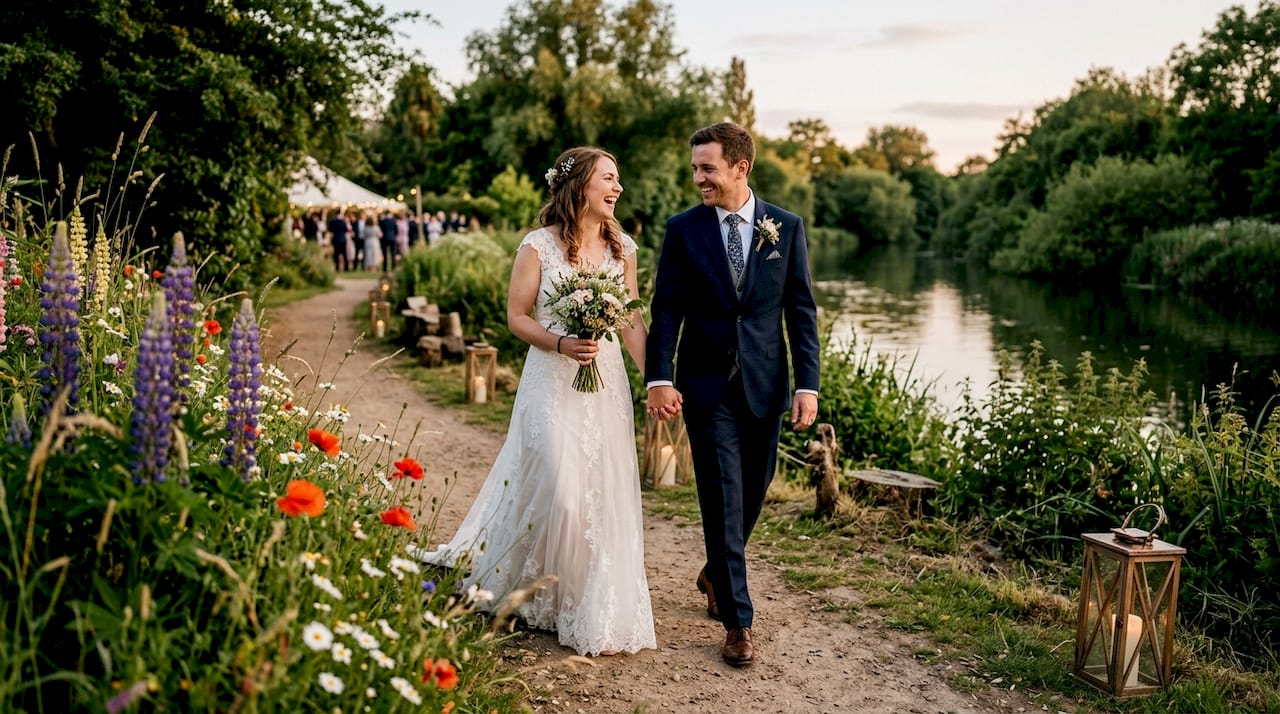
Storytelling wedding photography is defined as the practice of capturing a wedding day as a complete visual narrative, where genuine emotions, candid interactions, and unscripted moments form a sequence of images that reflect the couple’s unique love story. The industry term most closely aligned with this approach is documentary or photojournalistic wedding photography, and understanding what is storytelling wedding photography helps couples make one of the most consequential decisions of their wedding planning. Unlike traditional posed photography, this style prioritizes authentic, candid moments that reveal emotional connections as they happen. Ataviaweddings has built its entire practice around this philosophy, with over 16 years of experience and more than 1,600 weddings documented through this lens.
What is storytelling wedding photography, and how does it work?
Storytelling wedding photography works by treating your wedding day as a living story rather than a series of photo opportunities. The photographer functions as both witness and narrator, reading the room constantly to anticipate where emotion will surface next. The result is a gallery that flows chronologically, from the quiet nervousness of getting ready to the last dance, creating a cohesive visual arc that feels true to the day.
The philosophy behind this approach is straightforward. The story is documented live, not constructed afterward in editing. That means the photographer must align with your vision before the day begins, so they know which relationships, rituals, and details carry the most meaning for you. A skilled storytelling photographer does not wait for moments to happen. They position themselves deliberately, anticipating where the next meaningful frame will appear.
This is what separates storytelling photography from simply taking a lot of candid photos. Storytelling photography is refined and intentional, with structure and rhythm built into the sequence of images. Every frame serves the larger narrative.
How do storytelling and reportage wedding photography relate and differ?
Couples frequently encounter the terms reportage, photojournalistic, and documentary alongside storytelling wedding photography. These terms overlap significantly, but they carry subtle differences worth understanding.
Reportage wedding photography, also called photojournalistic wedding photography, emphasizes pure observation with minimal intervention. The photographer captures events exactly as they unfold, prioritizing truthfulness above all else. Storytelling photography shares that commitment to authenticity but adds a layer of narrative intention. The photographer makes deliberate compositional choices to build emotional continuity across the gallery, not just document individual moments.
Approach | Core focus | Photographer role | Outcome |
Storytelling | Emotional narrative arc | Active observer and narrator | Cohesive gallery with emotional flow |
Reportage/Photojournalistic | Truthful documentation | Passive witness | Authentic record of events |
Traditional posed | Formal portraits | Director | Polished, staged images |
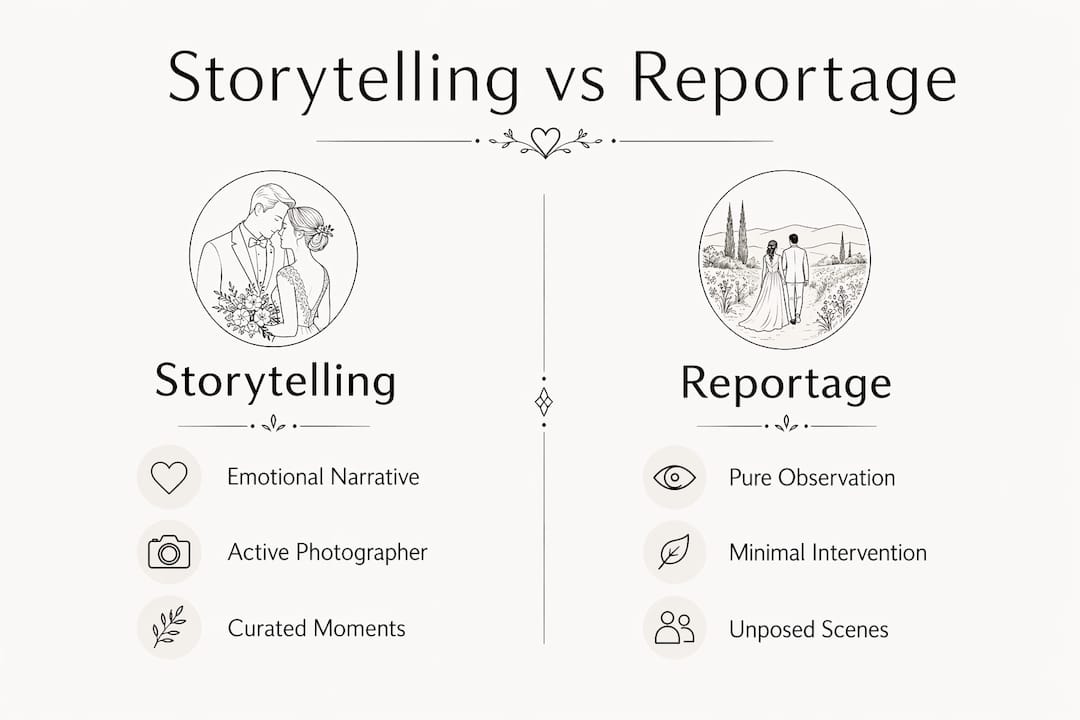
The practical difference shows up in how the final gallery feels. A reportage gallery reads like a news archive of your day. A storytelling gallery reads like a film. Traditional posed photography produces beautiful portraits but rarely conveys the emotional texture of the day. Most couples who want to genuinely relive their wedding find that storytelling photography ages the best emotionally.
Key characteristics that define storytelling wedding photography:
Narrative structure: Images are sequenced to build emotional momentum from beginning to end.
Empathy-driven: The photographer feels the day alongside you, not just records it.
Compositional intention: Frames are chosen to serve the story, not just capture what happened.
Minimal intervention: The photographer guides without directing, preserving natural behavior.
What makes storytelling wedding photography uniquely challenging?
Storytelling wedding photography demands a specific set of skills that go well beyond technical camera knowledge. Anticipation, empathy, and technical skill must work together simultaneously, because a missed moment cannot be recreated. The photographer must read emotional cues, predict where a scene is heading, and position themselves without drawing attention.
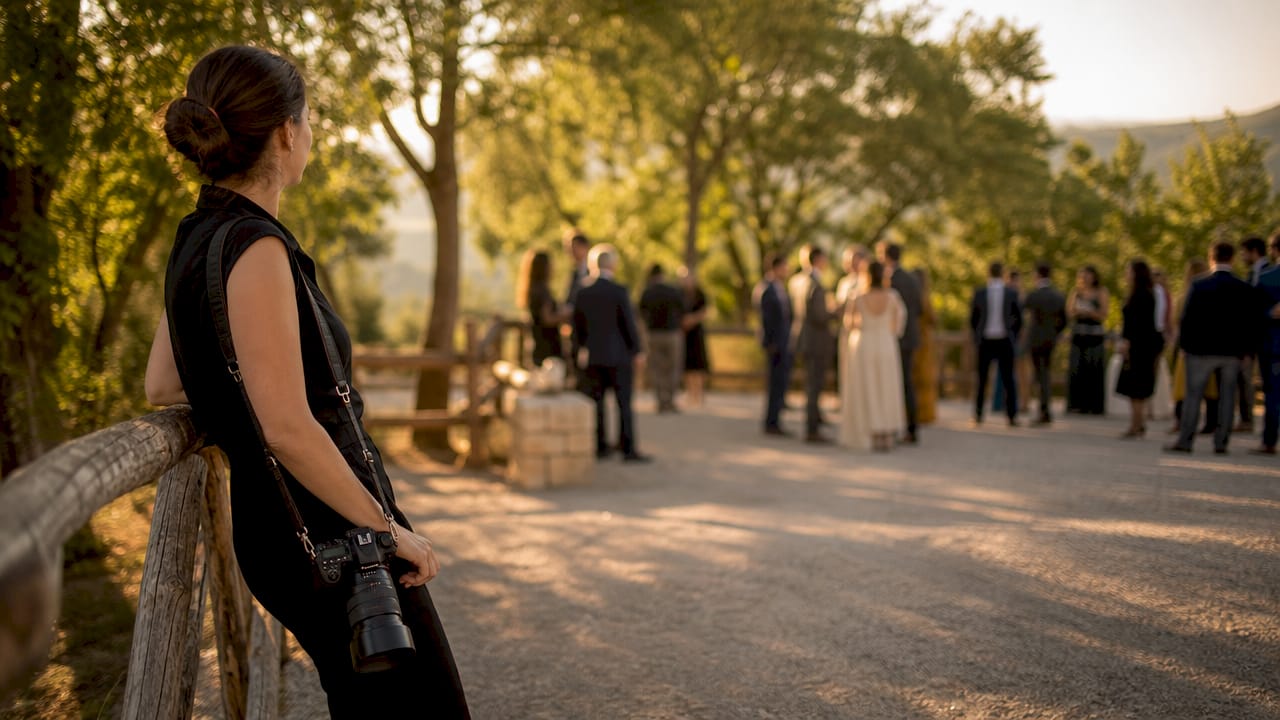
The “in-between” moments are where this style lives. A glance between a parent and child during the ceremony. The nervous laugh shared between partners right before the first look. The way a grandmother holds her program during the vows. These are the frames that make couples cry when they open their album years later. Storytelling photographers actively position themselves to catch these moments rather than waiting passively for scenes to develop.
This approach also requires the photographer to blend into the background socially. Guests who forget the photographer is present behave naturally. Natural behavior produces authentic images. A photographer who commands attention disrupts the very emotional flow they are trying to capture.
Pro Tip: Ask any photographer you are considering to walk you through three consecutive images from a past wedding and explain the story those frames tell together. A true storytelling photographer will describe the emotional arc, not just the technical settings.
One common misconception is that storytelling photography means zero direction. Expert storytelling photographers blend observation with gentle guidance to compose meaningful frames without disrupting natural emotions. They might quietly suggest you stand near a window for better light, but they will never tell you how to feel or what expression to make.
What moments and details does storytelling photography capture?
A storytelling wedding gallery covers far more than the ceremony and reception highlights. The full narrative begins before you walk down the aisle and continues long after the cake is cut. The best ceremony images balance wide context shots with intimate reactions to convey emotional stakes and narrative depth simultaneously.
The key moment categories that build a complete visual story:
Getting ready: The quiet, personal moments before the day begins. Nervous hands, shared laughter with bridesmaids, a parent helping with a button.
First look or pre-ceremony: The unguarded reaction when partners see each other for the first time. This is often the most emotionally raw frame in the entire gallery.
Ceremony: Vows, tears, laughter, and the reactions of guests who love you. Wide shots establish the setting; tight shots capture the feeling.
In-between moments: Tearful parents, nervous laughter, a stolen glance across the room. These fleeting details personalize the visual narrative in ways no posed shot can replicate.
Environmental and contextual details: The venue, floral arrangements, handwritten vows, family heirlooms, and table settings that anchor the story in a specific time and place.
Reception and celebration: Dancing, toasts, candid conversations, and the energy of people who are genuinely happy.
Small details function as storytelling anchors. A handwritten note tucked into a pocket. A grandmother’s brooch pinned to a bouquet. These objects carry emotional weight and connect generations. When photographed well, they become the frames couples return to most often.
Documentary galleries naturally tell a complete story when laid out in book form, which is why storytelling photography produces albums with genuine heirloom value. The chronological arc gives the album a beginning, middle, and end that feels satisfying to revisit.
How can couples prepare to get the most from storytelling photography?
The single most important step is choosing a photographer whose visual instincts align with your personality. Review full wedding galleries, not just highlight reels. A highlight reel shows the best 20 images. A full gallery shows whether the photographer can sustain narrative quality across an entire day.
Share your story with your photographer before the wedding. Tell them about the relationships that matter most, the rituals that carry personal meaning, and the emotions you expect to feel. Great storytelling photography involves empathy and curiosity, and that empathy deepens when the photographer understands who you are as a couple.
Practical steps to prepare for storytelling coverage:
Schedule a pre-wedding conversation: Walk your photographer through your timeline, your family dynamics, and any moments you consider non-negotiable.
Build in buffer time: Storytelling photographers need space to work. A rushed timeline produces rushed images.
Trust the process: Resist the urge to manage every shot. The images you did not plan are often the ones you love most.
Discuss the portrait window: A 15–20 minute portrait session is standard practice within storytelling coverage. It complements the candid narrative without replacing it.
Pro Tip: During your photographer consultation, ask: “How do you handle a moment you almost missed?” Their answer reveals how they think under pressure, which matters far more than their equipment list.
Setting expectations about the balance between candid and portrait moments prevents frustration on the day. A short portrait session is not a failure of documentary style. It is a practical complement that gives you a handful of intentional images alongside the full candid narrative.
Key Takeaways
Storytelling wedding photography preserves your day as a living emotional narrative, and that narrative ages better than any collection of posed portraits.
Point | Details |
Definition matters | Storytelling photography documents emotional arcs, not just events, producing a cohesive visual legacy. |
Know the terms | Reportage and photojournalistic styles overlap with storytelling but differ in narrative intention and photographer involvement. |
In-between moments win | Glances, nervous laughter, and small details create the frames couples return to most over the years. |
Preparation drives results | Sharing your story and building buffer time into the timeline directly improves the quality of storytelling coverage. |
Portraits still belong | A short 15–20 minute portrait session complements candid storytelling without undermining its authenticity. |
Why storytelling photography is the only kind worth having
After documenting weddings for over 16 years, I have watched couples flip through their albums and cry at the same frames every time. It is never the perfectly lit portrait. It is the father wiping his eyes before he walks his daughter down the aisle. It is the groom’s hands shaking slightly as he reads his vows. Those are the frames that hold the actual memory of the day.
The misconception I hear most often is that storytelling photography means giving up control. Couples worry they will not have enough “good” photos if the photographer is not directing every shot. The opposite is true. When you trust a skilled storytelling photographer to work freely, you get images that feel real because they are real. Posed images show you how you looked. Storytelling images show you how you felt.
Photography that captures a wedding day as a story ages better emotionally, preserving memory more vividly than isolated posed shots. I have seen this play out hundreds of times. The couples who invest in genuine storytelling coverage are the ones who still pull out their albums a decade later.
The connection between photographer and couple is not a soft, optional extra. It is the technical foundation of the work. A photographer who does not understand your relationship cannot tell your story. The pre-wedding conversations, the timeline review, the shared understanding of what this day means to you — all of that is part of the craft.
— Atavia
How Ataviaweddings captures your story with authenticity
Ataviaweddings has spent over 16 years refining the art of wedding storytelling, with a portfolio of more than 1,600 weddings built entirely on documentary-style coverage and genuine emotional capture.

Every Ataviaweddings photographer brings deep empathy and sharp anticipation to each wedding, positioning themselves to catch the moments that matter before they disappear. The wedding photography packages are designed to give couples full storytelling coverage from the first quiet moments of getting ready through the last song of the night. Couples can browse the real wedding gallery to see exactly how a complete storytelling narrative looks across a full day. Ataviaweddings carries a record of 100% positive client feedback, built on the promise that every fleeting moment becomes a timeless keepsake.
FAQ
What is storytelling wedding photography in simple terms?
Storytelling wedding photography is the practice of documenting your wedding day as a sequence of genuine, emotional images that together form a complete visual narrative of your love story, rather than a collection of posed portraits.
How is reportage wedding photography different from storytelling?
Reportage wedding photography focuses on pure observation with minimal intervention, while storytelling photography adds narrative structure and emotional layering, with the photographer making deliberate compositional choices to build a cohesive gallery.
Will I still get formal portraits with a storytelling photographer?
A short portrait session of roughly 15–20 minutes is standard practice within storytelling coverage. It complements the candid documentary work without replacing it.
What moments does storytelling wedding photography prioritize?
Storytelling photographers prioritize in-between moments such as tearful parents, nervous laughter, and quiet glances, alongside key events like vows and the first look, to build a gallery with genuine emotional depth.
How do I know if a photographer truly practices storytelling photography?
Ask them to walk you through three consecutive images from a past wedding and explain the emotional story those frames tell together. A genuine storytelling photographer will describe the narrative arc, not just the technical details.
Recommended
Comments