
What Is Emotional Wedding Photography? A Couple's Guide
- 3 days ago
- 8 min read
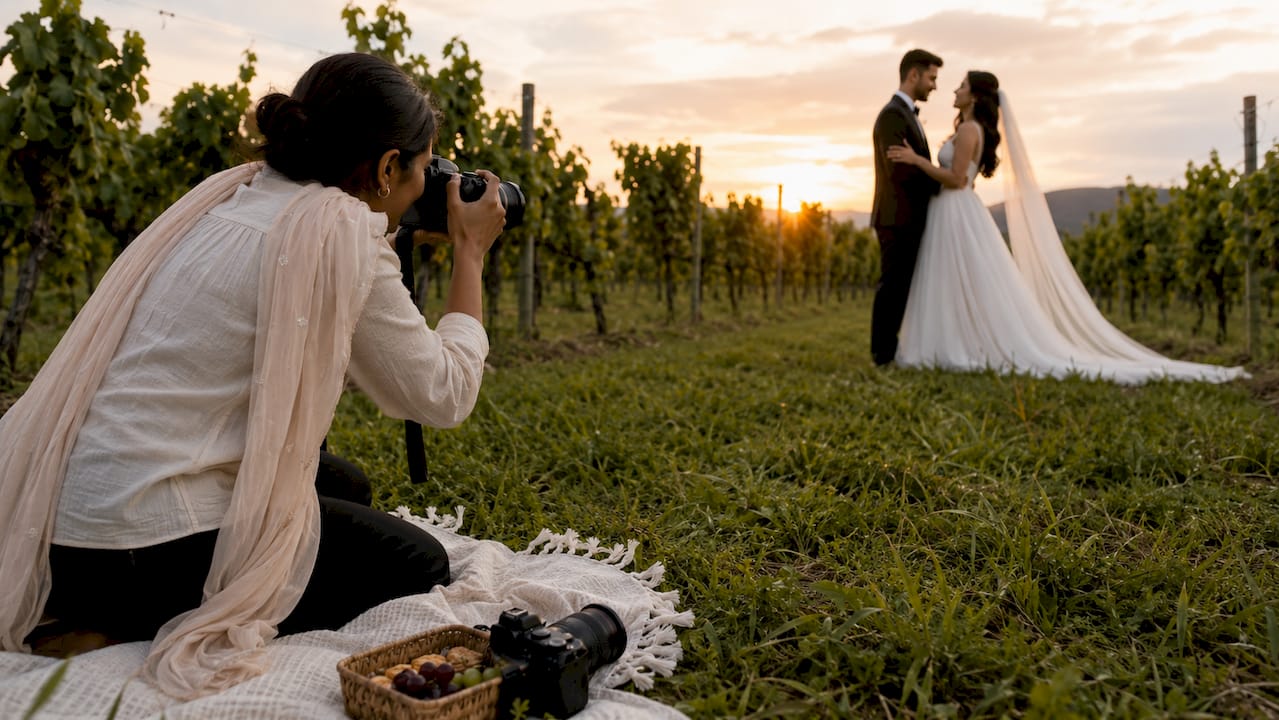
Emotional wedding photography is defined as the practice of capturing genuine, unscripted human reactions during a wedding day rather than staged poses. The industry term for this approach is photojournalistic or documentary-style wedding photography. It prioritizes truth over polish, documenting real feelings as they unfold. Ataviaweddings has built its entire practice on this philosophy across more than 1,600 weddings and 16 years of experience. The result is a visual record that reflects who you actually are on your wedding day, not a curated performance of it.
What is emotional wedding photography and how does it differ from other styles?
Emotional wedding photography captures genuine human reactions rather than directing couples into rehearsed positions. That distinction matters more than most couples realize when they start planning. Traditional posed photography produces clean, symmetrical images. Emotional or photojournalistic coverage produces images that make you cry when you look at them ten years later.
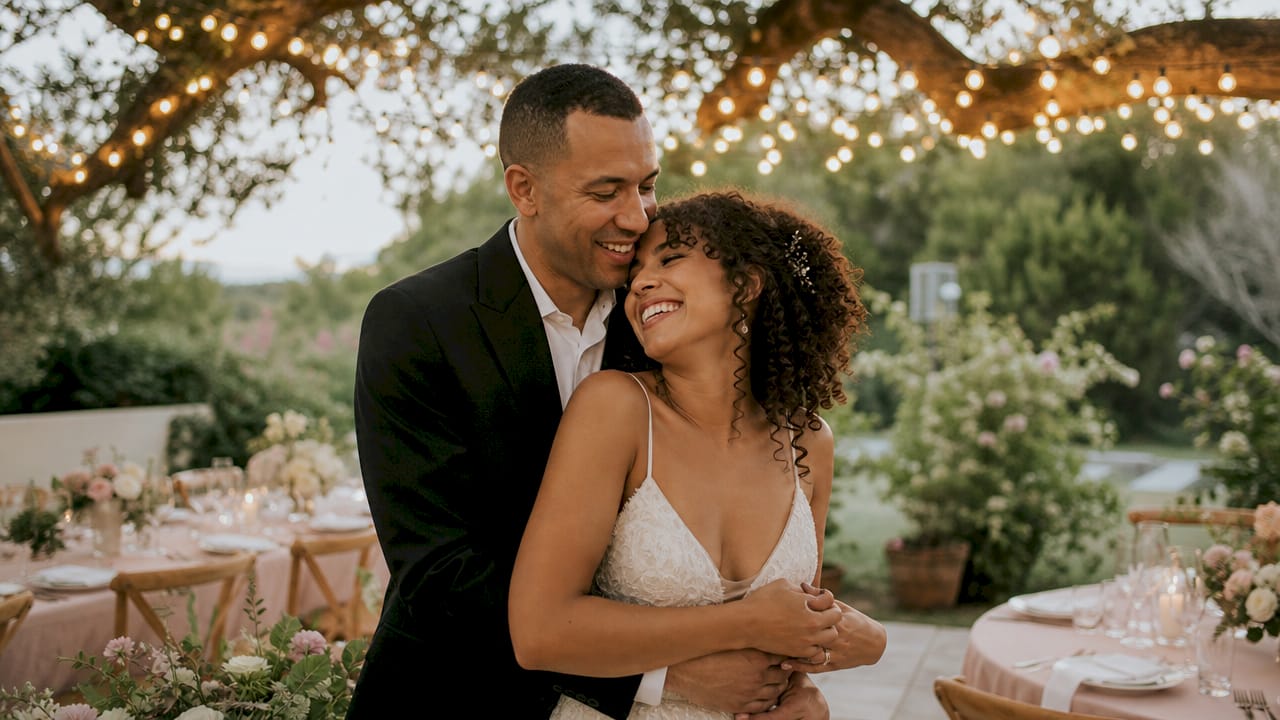
The most common misconception is that emotional photos are simply candid photos. They are not the same thing. Candid shots are unposed but not necessarily intentional. Emotional wedding photography requires anticipation, awareness, and deliberate positioning to catch the peak of a real feeling. A photographer who randomly clicks during the reception produces candid images. A photographer who watches your mother’s face during your first dance and moves into position before the tears fall produces emotional storytelling.
Here is how the main wedding photography styles compare:
Style | Approach | Emotional depth | Photographer role |
Traditional posed | Directed, structured | Low | Active director |
Fine art | Styled, aesthetic-driven | Medium | Creative director |
Candid | Unposed, opportunistic | Medium | Observer |
Photojournalistic/emotional | Observational, anticipatory | High | Silent witness |
The photojournalistic approach sits at the far end of the spectrum. The photographer’s job is to disappear into the background and document what actually happens. That requires a specific skill set and a specific mindset, not just a camera setting.
Key characteristics that define this style:
Minimal photographer intervention during moments
Positioning based on emotional potential, not composition alone
Acceptance of imperfect lighting when truth matters more
Coverage of sequences and reactions, not just single frames
Priority given to feeling over technical perfection
What techniques do photographers use to capture authentic emotional moments?
The foundation of emotional wedding photography is observation before action. Photographers position themselves early to anticipate where emotion will peak, then wait. This is the opposite of directing a scene. It requires patience, spatial awareness, and a deep understanding of how weddings unfold emotionally.
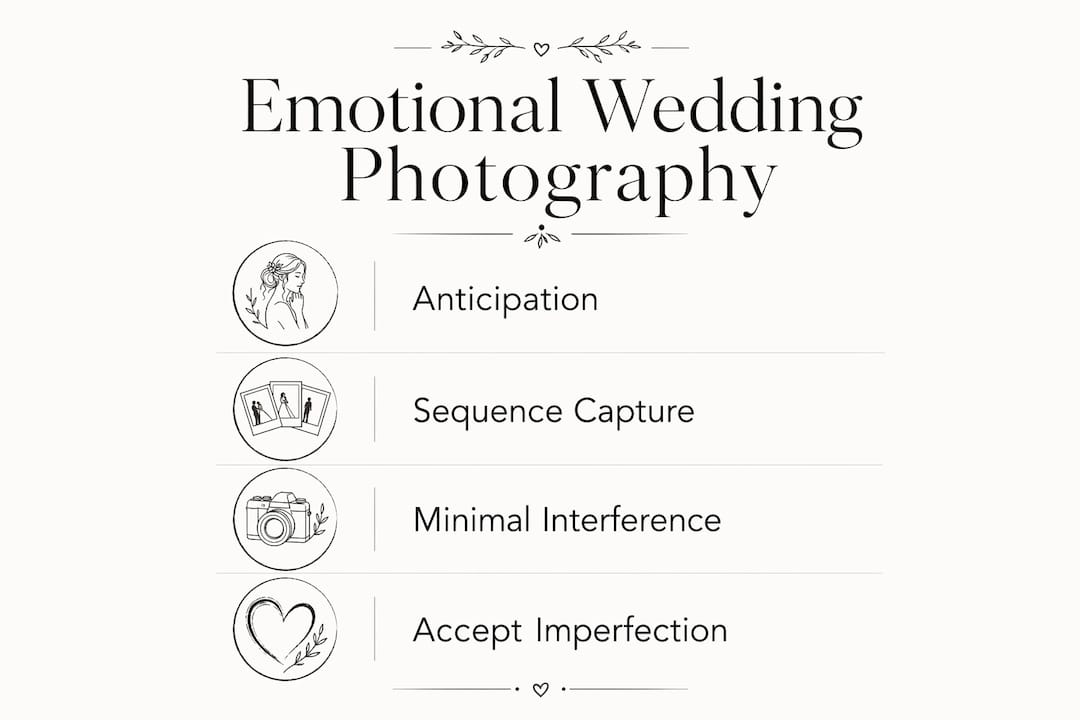
1. Anticipation and positioning
A skilled photographer reads the room before the moment arrives. During the ceremony, that means identifying where the groom will stand when he first sees his partner walk down the aisle, then placing themselves at an angle that captures both faces. During speeches, it means watching the couple’s reactions rather than the speaker. The camera follows emotion, not action.
2. Sequence capture over single frames
Storytelling discipline means selecting frames that add meaning through context, reaction, and sequence. A single image of a bride laughing is nice. A sequence showing what caused the laugh, the laugh itself, and the moment after tells a story. Photographers who think in sequences produce galleries that feel like a film, not a slideshow.
3. Minimal interference
The photographer’s physical presence affects behavior. When a photographer stands close and directs, people perform. When a photographer stays back and stays quiet, people forget the camera exists. That forgetting is the goal. The most emotionally powerful wedding images almost always come from moments when the couple was completely absorbed in each other or in the event around them.
4. Accepting imperfection
Photojournalistic style requires accepting imperfections like imperfect composition or lighting because truth and emotion take precedence over polished visuals. A slightly soft image of a father and daughter embracing carries more weight than a technically perfect portrait of them standing side by side. Couples who understand this principle end up with galleries they love far more than those who prioritize technical flawlessness.
Pro Tip: Ask your photographer to show you a full wedding gallery, not just highlight images. A full gallery reveals whether they capture emotional sequences and quiet in-between moments, or only peak action shots.
How can couples prepare for emotional wedding shots?
The single most effective thing you can do is communicate how you want to feel in your photos rather than how you want to look. Most couples approach photographer consultations with a list of poses or aesthetic references. That approach gives the photographer visual direction but no emotional direction. Telling your photographer “I want to feel the same way looking at these photos as I did standing at the altar” is far more useful than showing them a Pinterest board of golden-hour portraits.
Here is a practical framework for building your emotional brief:
Identify your emotional priorities. Do you want intimacy and quiet tenderness, or joy and celebration? Both are valid. Naming them helps.
Describe specific relationships. Tell your photographer which relationships carry the most emotional weight. A grandmother who rarely smiles. A best friend who has been through everything with you. These details change where a photographer focuses.
Share your day’s emotional arc. Walk through the day and flag the moments you expect to feel most intensely. The first look, the vows, the parent dances. Your photographer will already plan for these, but your personal context adds depth.
Be honest about your comfort level. Some couples are openly emotional. Others are private. A photographer who knows this adjusts their approach accordingly.
Trust built during planning leads couples to act naturally on the day, which produces more genuine emotional expressions in photos. This is not a soft concept. It is a practical outcome. Couples who feel comfortable with their photographer stop performing for the camera. That comfort shows in every image.
Pro Tip: Before your final planning meeting, write down three feelings you want to experience when you look at your wedding photos in 20 years. Share that list with your photographer. It reframes the entire conversation from aesthetics to legacy.
Mood boards are useful but limited. Sharing visual references does not guarantee emotional photos. A mood board shows a photographer what you find beautiful. An emotional brief tells them what you find meaningful. Use both, but weight the conversation toward feeling.
What emotional moments are most worth capturing at a wedding?
The most treasured wedding images almost always come from moments nobody planned. Spontaneous laughter, tears of joy, quiet tender exchanges, and energetic celebrations consistently produce the most meaningful images. These unplanned moments carry weight precisely because they were not manufactured.
Moment type | Emotional quality | Why it resonates |
Getting ready | Anticipation, vulnerability | Reveals the private self before the public day |
First look | Shock, love, relief | Unguarded reaction to seeing your partner |
Vows | Commitment, tenderness | Words spoken only once, felt completely |
Parent reactions | Pride, grief, joy | Generational love made visible |
Reception laughter | Ease, celebration | Shows who you are when fully relaxed |
Quiet in-between moments | Intimacy, reflection | Often the most personal images of the day |
The getting-ready phase is consistently undervalued by couples. The private moments before the ceremony, a parent fastening a button, a friend fixing a veil, a quiet moment alone before everything begins, carry emotional weight that no posed portrait can replicate. Photographers who cover this phase with the same attention they give the ceremony produce galleries with a complete emotional arc.
Environment also shapes emotional storytelling. A small family ceremony in a backyard produces different emotional textures than a ballroom reception with 200 guests. Neither is better. Both offer specific emotional opportunities. The photographer’s job is to read the environment and find where genuine feeling lives within it.
Key Takeaways
Emotional wedding photography captures genuine, unscripted moments through observation and anticipation, producing images that reflect who you truly are rather than a posed version of your wedding day.
Point | Details |
Emotional vs. candid photography | Emotional photos require deliberate anticipation, not just random unposed clicks. |
Photojournalistic technique | Photographers observe and position early to catch peak emotional reactions without directing scenes. |
Communicate feelings, not poses | Tell your photographer how you want to feel in photos, not just how you want to look. |
Trust enables authenticity | Couples who feel comfortable with their photographer act naturally, producing more genuine images. |
Unplanned moments matter most | Spontaneous laughter, tears, and quiet exchanges consistently create the most treasured wedding images. |
Why I believe emotional authenticity is the only thing that ages well
After covering more than 1,600 weddings over 16 years, I have watched couples return to their galleries with very different reactions. The ones who prioritized posed perfection often feel their photos look dated within a decade. The ones who prioritized emotional truth still cry when they open their galleries 15 years later.
The uncomfortable reality is that most couples do not know what they want from their wedding photography until they see what they did not get. Couples who focused entirely on aesthetics sometimes feel their galleries are beautiful but hollow. They look at the images and see a well-lit event. They do not see themselves.
The most common mistake I see is couples treating the photographer consultation as a logistics meeting. Shot lists, timelines, and venue details matter. But the conversation that actually changes the quality of your gallery is the one about how you want to feel. That conversation takes ten minutes and most couples never have it.
Trust is not a bonus feature of a good photographer relationship. It is the mechanism that produces authentic images. When you trust your photographer, you stop performing. When you stop performing, your real face shows up in the photos. That face is the one worth preserving.
My advice is simple. Choose a photographer whose existing work makes you feel something. Not a photographer whose work impresses you technically. If you look at their gallery and feel nothing, no amount of planning will change what you get.
— Atavia
How Ataviaweddings approaches emotional wedding storytelling
Ataviaweddings was built on the belief that the most powerful wedding images come from real moments, not directed ones. With over 16 years of experience and a portfolio spanning more than 1,600 weddings, the team brings a practiced eye for anticipating emotion before it peaks.

Couples working with Ataviaweddings receive more than coverage. They receive a collaborative process designed to surface their emotional priorities before the wedding day begins. The photography and video packages are built to give couples complete emotional storytelling from preparation through celebration. The wedding gallery shows exactly what that looks like in practice, with full wedding coverage that reflects genuine feeling from start to finish.
FAQ
What is the difference between emotional and candid wedding photography?
Emotional wedding photography is intentionally documented with storytelling in mind, requiring anticipation and awareness of emotional potential. Candid photography simply means unposed shots, without the deliberate focus on capturing peak emotional reactions.
How do I communicate my emotional vision to my wedding photographer?
Tell your photographer how you want to feel in your photos rather than describing specific poses or aesthetics. Describing emotions like intimacy, joy, or calm gives your photographer creative direction that aligns with your actual priorities.
Does emotional wedding photography mean my photos will be imperfect?
Photojournalistic and emotional wedding photography sometimes includes images with imperfect lighting or composition because truth takes precedence over technical polish. The emotional weight of a genuine moment consistently outweighs a technically perfect but staged image.
Which wedding moments produce the most emotional photos?
Spontaneous laughter, tears of joy, quiet tender exchanges, and energetic celebrations consistently produce the most meaningful images. Getting-ready moments and parent reactions are frequently the most emotionally powerful images in a full wedding gallery.
How do I choose a wedding photographer for emotional coverage?
Look at full wedding galleries rather than highlight portfolios to assess whether a photographer captures sequences, reactions, and quiet in-between moments. Choose a photographer whose existing work makes you feel something, not just one whose technical skills impress you.
Recommended
Comments